 The Great Railroad Strike of 1877: A Legacy That Still Drives Our Fight Today
Long before contracts, grievance procedures, and workplace protections were written into agreements, working people in this country were forced to fight for even the most basic dignity on the job.
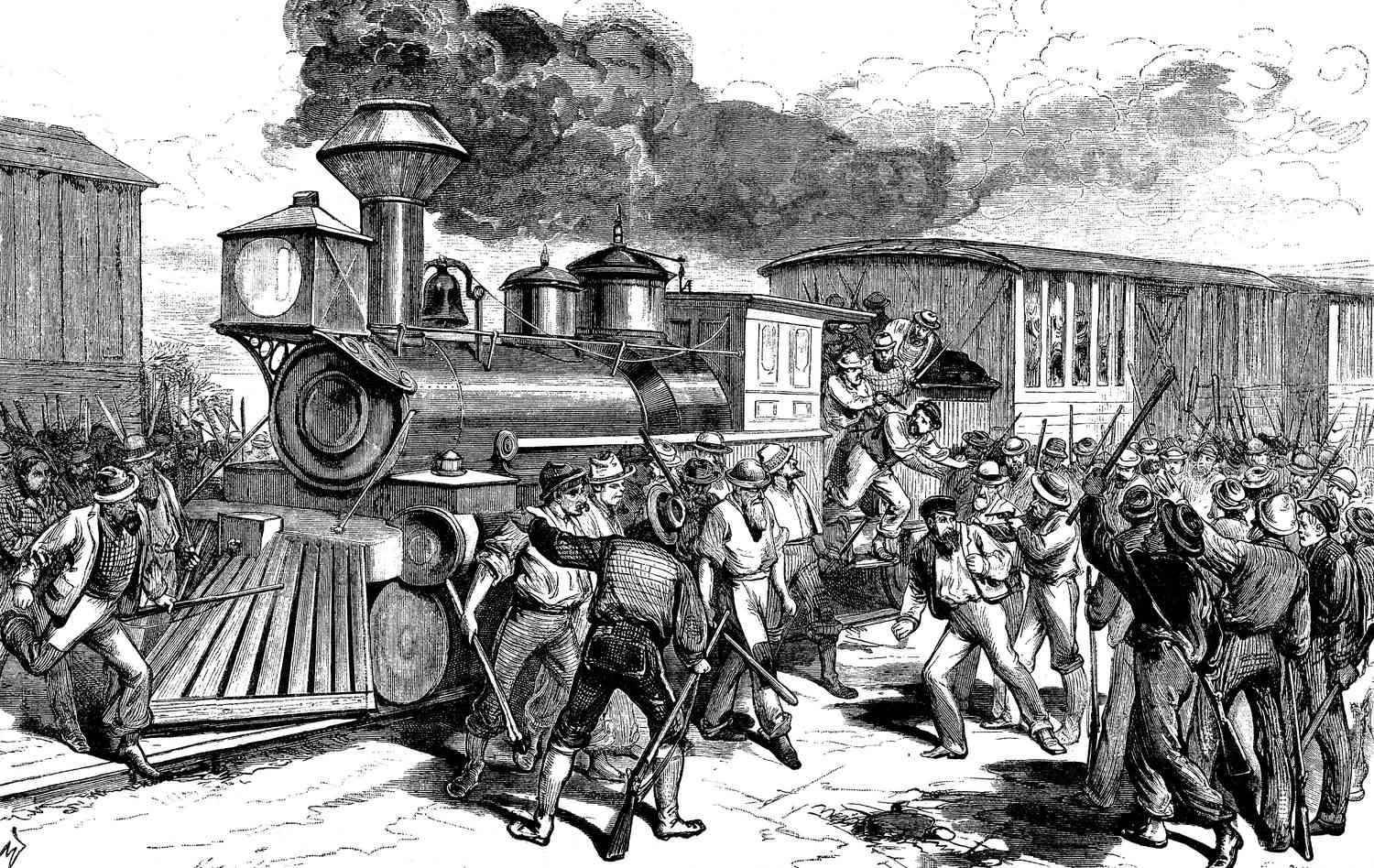
One of the earliest and most defining moments in that fight came in 1877 with the Great Railroad Strike of 1877, a nationwide uprising of workers that helped shape the labor movement we carry forward today.
When Workers Said “Enough”
In the wake of the Panic of 1873, working families were hit hard. Jobs were scarce, wages were slashed, and corporations demanded more while giving less.
Railroad workers, the backbone of America’s growing economy, faced repeated wage cuts and dangerous working conditions. When the Baltimore and Ohio Railroad announced yet another pay cut in July of 1877, workers refused to back down.
They stood up.
What started as a local protest quickly spread across the country, from West Virginia to Pennsylvania, Illinois, and Missouri. More than 100,000 workers walked off the job, bringing rail traffic to a standstill and sending a clear message:
Working people will not be pushed indefinitely.
A Fight Met With Force
Instead of listening to workers, corporations and government leaders responded with force.
Militias were called in. Federal troops were deployed. In city after city, workers were met not with negotiation, but with violence. By the end of the strike, over 100 workers had lost their lives.
The strike itself did not deliver immediate victories, but it changed everything.
The Birth of a Movement
The Great Railroad Strike of 1877 proved something that still holds true today:
When workers stand together, they become impossible to ignore.
It laid the foundation for the growth of organized labor in the United States. In the years that followed, unions became stronger, more coordinated, and more determined to secure real protections for working people.
It also forced the country to confront a hard truth, that unchecked corporate power comes at a cost and that workers deserve a voice.
Why It Still Matters to IAM Members Today
For members of the IAM, the legacy of 1877 isn’t just history, it’s a reminder of why we do what we do every day.
The rights we fight to protect today didn’t come from generosity at the top. They were earned through struggle, sacrifice, and solidarity.
The ability to negotiate contracts.
The right to fair wages and safe working conditions.
The strength of having a union voice on the job.
All of it is built on the backs of workers who stood up before us.
And while the challenges may look different today, the fight remains the same.
We still see attempts to weaken unions.
We still see working people asked to do more for less.
We still see decisions made without workers at the table.
Carrying the Torch Forward
The workers of 1877 didn’t have the protections we have today, but they had something just as powerful:
each other.
That same spirit lives on in every IAM member who shows up, speaks out, and stands shoulder to shoulder with their brothers and sisters.
Their fight is our foundation.
And our responsibility is to keep building on it.
Because the truth hasn’t changed in nearly 150 years:
When we stand united, we win.